
Receivers and observing time at FAST
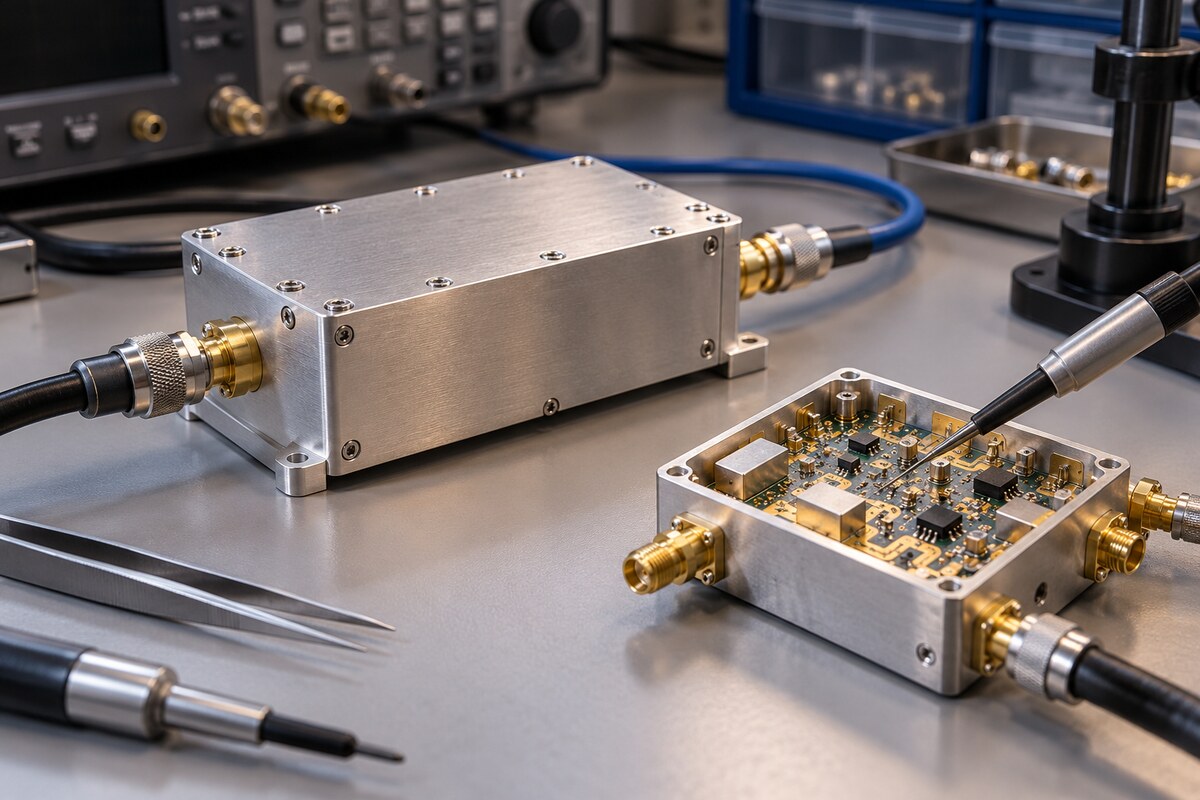
FAST’s technical team spent nearly two years developing a domestic low-noise amplifier for its receiver. Senior engineer Chai Xiaoming described a compact, silver-plated component replacing technology previously imported from the United States, Sweden and Australia. Brazil’s BINGO project expressed interest in a batch purchase. In April 2024, that possible cooperation remained conditional; it was not a completed export order.
The Five-hundred-meter Aperture Spherical Radio Telescope in Guizhou was recording about 5,300 observing hours annually and had discovered more than 900 pulsars. British astronomer Ralph Eatough, a Manchester doctoral graduate working at the National Astronomical Observatories, handled pulsar data processing and time-frequency optimisation. He was also searching for pulsars in the Milky Way’s small satellite galaxies, exploiting FAST’s sensitivity to faint signals. Engineer Sun Chun described applications from 15 foreign countries and nearly 900 approved observing hours. Chief engineer Jiang Peng wanted more stable and efficient operations, alongside new technical capabilities.
A facility shaped by its site
FAST occupies a natural karst depression in Guizhou. The observatory became a major national scientific infrastructure project under China’s 11th Five-Year Plan. National acceptance took place on January 11, 2020, opening the facility for formal operation. Its scientific equipment combines a large collecting surface with precision positioning.

Nineteen receiving directions
The 19-beam receiver has nineteen identical horn-and-receiver sets operating between 1.05 and 1.45 GHz. The horns form a hexagonal arrangement. One central horn occupies the telescope’s focus, while the other eighteen occupy positions on its focal plane. Their far-field patterns point towards different areas of the sky, allowing nineteen celestial areas to be observed simultaneously. The facility’s May 2025 equipment description gives a nineteenfold survey-speed comparison with a single-beam receiver. That figure describes the multibeam survey configuration, rather than a measured speedup for every observing project. The L-band system serves pulsar searches, fast radio burst detection and neutral-hydrogen mapping. Those programmes use the same receiver architecture to investigate different kinds of radio emission.
Moving the feed cabin
FAST supports its feed cabin with a flexible cable robot spanning as much as 600 metres. Six sets of drive assemblies work with guide pulleys and steel cables. Suspension cable cars carry the cabin’s power and signal connections, while electrical equipment and control units form the rest of the positioning system. The suspended cabin moves along the telescope’s focal surface.
The May 2025 equipment specification places that surface about 140 metres above the ground, across a diameter of approximately 206 metres. The cable-supported feed platform weighs about 30 tonnes. The flexible support replaces the traditional concept of a large rigid feed-support structure. The specification’s comparison with an approximately 10,000-tonne rigid alternative is a design comparison, rather than the weight of an earlier FAST platform that was removed.

Actively adjusting a cable net
The reflector’s supporting cable net contains 6,670 main cables, 2,225 node discs and 2,225 down-tied cables. Each node connects through a down-tied cable to a hydraulic actuator anchored to the ground. Coordinated actuator strokes actively change the net’s shape. Its manufacturing specification limits main-cable length errors to one millimetre at 20°C. A separate fatigue specification describes main cables carrying stresses up to 500 MPa over two million load cycles. These are equipment manufacturing and fatigue specifications for the actively deformable reflector support. The net and the suspended feed cabin belong to different mechanical systems.
Automating laser-target maintenance
FAST’s reflector carries 2,225 laser targets that form part of its control system and require periodic maintenance or replacement. Its one-millimetre aluminium panels cannot support an adult’s normal weight. In August 2023, the CAS Institute of Automation detailed a maintenance robot developed with the National Astronomical Observatories and Guizhou Radio Astronomy Observatory. Its functions included target cleaning, removal and installation. The development formed part of a FAST maintenance-robot project accepted by the Ministry of Science and Technology.
The system combines a target-maintenance mechanism, an omnidirectional mobile platform and navigation. It measures target positions in three dimensions, grasps and removes old targets, and installs and tightens replacements. Engineers tested its movement and maintenance functions on simulated reflector slopes as steep as 56 degrees. Site-adaptation work at Guizhou followed, and the robot had been applied to laser-target replacement and maintenance. These operations addressed the telescope’s steep, lightweight working surface and the handling of individual control-system targets.

How observing access was organised in 2025
FAST’s March 31, 2025 call invited proposals for observations between August 2025 and July 2026, with a submission deadline of May 15 at 16:00 UT. Users of any nationality or affiliation could apply, but only the 19-beam receiver was offered. Approximately 1,980 hours were planned for regular and medium-sized programmes. This was a proposed allocation in a call, rather than a record of completed observations.
- Regular Science Programmes could request up to 50 hours.
- Medium-Sized Programmes could request 50–150 hours, with shortlisted applicants presenting to the time-allocation committee.
- Up to three medium-sized awards were expected, each covering at most 150 hours over two or three consecutive years.
- Principal investigators of medium-sized proposals needed an institutional affiliation in China.
The previous cycle’s oversubscription averaged 4.9, rising to 7.6 for local sidereal times between 18 and 22 hours. Regular-programme data carried a twelve-month proprietary period. Applicants were instructed to search the observation archive before proposing new measurements.
The September 2024 core-array plan
Construction of the FAST Core Array began on September 25, 2024. The proposed extension comprised twenty-four 40-metre antennas within five kilometres of the main telescope. Jiang Peng, then described as deputy director of the National Astronomical Observatories, presented a combination of FAST’s single-dish sensitivity with the additional array’s angular resolution. Completion and operation were estimated for 2027; the announcement did not describe a finished observing array.

The planned scientific work included fast radio bursts, pulsars, neutral-hydrogen galaxies, gravitational-wave-related studies and exoplanetary systems. Broad frequency coverage and field of view were intended to support those programmes. The same September account placed the telescope’s international opening on March 31, 2021. It recorded more than 900 hours facilitated for researchers from fifteen countries and a separate 2024–2025 call offering 1,600 hours for freely submitted projects. These figures concern different access periods and should not be combined with the later 1,980-hour call as one annual total.
A cable-maintenance milestone in June 2026
Engineers completed installation of six domestically developed suspension cables on June 15, 2026. The cables supported the 30-tonne feed cabin above the reflector and had to accommodate its motion across the approximately 206-metre tracking region. The maintenance team’s leader, Lei Zheng, said commissioning would review and optimise the system using information collected during replacement. Installation was complete, while the subsequent testing and commissioning remained separate tasks.
The announced next step was a twenty-four-hour static load test, followed by movements through the system’s operating limits. Semiannual inspections were planned after normal scientific observations resumed. The cables’ design requirement called for five years without fracture under intensive observing schedules, including repeated bending and pulse loads. Measurement-and-control engineering director Yao Rui put research and development costs at roughly half those of comparable foreign products. That was an attributed comparison for the cable-development project, not a measured reduction in the cost of all FAST operations.

Keeping time with millisecond pulsars
The Chinese Pulsar Timing Array used FAST to monitor 57 millisecond pulsars over three years and five months. Its June 2023 findings identified evidence of quadrupolar correlations compatible with nanohertz gravitational waves at a statistical confidence of 4.6 sigma. The researchers analysed the observations with independently developed software. The result concerned correlated timing signals across a pulsar ensemble.
Nanohertz signals have periods measured in years and wavelengths extending across light-years. The programme began accumulating trial observations with FAST in 2019, while telescope commissioning was still under way. Its initial forty-one-month span was shorter than the fifteen-to-twenty-five-year datasets collected by other international timing collaborations. The Chinese team stressed that the existing observations could not yet determine the principal physical origin of the gravitational-wave signal. Longer timing baselines remained part of its research programme. The pulsars supplied stable rotational signals, while the telescope measured their arrivals; instrument sensitivity, data processing and repeated observations all formed part of the experiment.
A binary pulsar with recurring eclipses
A discovery published in May 2025 centred on PSR J1928+1815, found by a team led by Han Jinlin using FAST. The pulsar rotates once every 10.55 milliseconds. Its binary orbit lasts 3.6 hours, and the companion blocks the radio signal for approximately one-sixth of each orbit. Researchers interpreted the companion as a likely helium core left after a common-envelope stage.

In the proposed evolutionary history, interaction strips a companion’s outer layers and leaves a compact pair. Material accretion can spin up the neutron star. Han associated the discovery with longstanding questions about mass exchange, orbital shrinkage and envelope ejection. He also described possible future evolution into two compact stars whose eventual merger would generate gravitational waves. These were evolutionary interpretations and predictions, not events already observed in this system. National Radio Astronomy Observatory scientist Scott Ransom, a paper reviewer, identified opportunities for further population modelling, optical and infrared observations and long-term timing. The recurring eclipse provides another reason for monitoring the same target repeatedly.
Following a fast radio burst across facilities
FAST discovered the repeating source FRB 20190520B. A subsequent international campaign monitored it with telescopes in Australia and the United States for seventeen months and detected hundreds of bursts. The May 2023 findings concerned changes in the bursts’ polarisation, particularly the Faraday rotation measure, which changed substantially and reversed sign twice. The measurements concerned the magnetised environment along the radio signal’s path.
Feng Yi of Zhejiang Lab linked the reversals to an extreme changing magnetic environment. The researchers proposed that the source might occupy a binary system, with a massive star or black hole as a possible companion. Their proposed explanation remained conditional. Fast radio bursts last only milliseconds, and their physical origins continued to be investigated. The campaign combined discovery at FAST with longer-term measurements at other observatories. Its seventeen-month monitoring period and repeated detections differed from the duration of any one burst. The study therefore used both very short radio signals and a much longer observational record.

Sub-second radio structure near a black hole
FAST observations between 2020 and 2022 examined the microquasar GRS 1915+105 through high-time-resolution radio-continuum and polarisation monitoring. The system contains a rapidly rotating black hole and radio-emitting jets. Observations in January 2021 and June 2022 revealed faint oscillations with periods of approximately 0.2 seconds. Their periods were not stable, and the oscillations were absent much of the time, so the researchers described them as quasi-periodic. The July 2023 Nature publication connected the radio variations with the system’s relativistic jets. Wuhan University and the National Astronomical Observatories jointly led the work. Tian Pengfu, Zhang Ping, Wang Wei and Wang Pei were joint first authors. A microquasar combines a compact object with an ordinary stellar companion, with accreted matter producing a hot disc and jets. The monitoring addressed changes in radio intensity and polarisation across selected observations of an already known system.
Hydrogen filaments in a fast-moving cloud
Shanghai Astronomical Observatory researchers and collaborators published their G165 findings in July 2025. They used FAST to examine an atomic-hydrogen cloud moving at approximately 300 kilometres per second. It lies about 50,000 light-years from Earth, away from the crowded Galactic plane. The cloud is less affected by nearby stars and gravitational disturbances than clouds in denser Galactic environments. Observations of hydrogen’s 21-centimetre emission revealed a cloud dominated by warm neutral gas, with little or no cold component. The gas contained a tangled filamentary network rather than a smooth distribution. Multiple velocity layers, twisting structures and variations along the filaments indicated supersonic turbulence. The researchers used magnetohydrodynamic simulations to investigate those features. Turbulence acting with magnetic fields reproduced structural and velocity characteristics without requiring gravity in those simulations. G165 provided a comparatively isolated setting for examining early gas organisation. The observations and simulations addressed the behaviour of the cloud’s warm neutral medium, rather than documenting a completed sequence of star formation.
From individual targets to hydrogen catalogues
The FAST All Sky HI survey, FASHI, released its first catalogue in January 2024 with 41,741 extragalactic neutral-hydrogen sources across about 7,600 square degrees. Its September 2026 second release contained 156,411 sources over approximately 19,500 square degrees. The second release drew on observations collected between August 2020 and July 2025. The interval between catalogue releases differs from the full five-year observing span behind the later dataset.

The second release had a typical sensitivity of 0.57 millijanskys per beam. Its 19-beam observations and drift-scanning strategy accumulated a wide-area record of neutral hydrogen’s 21-centimetre emission. Zhang Chuanpeng was first author, with research teams led by Jiang Peng and Guo Hong among the participating groups. The catalogue was made publicly available for further research. Its intended applications included gas accretion, star formation, galaxy evolution and comparison with optical surveys. The team also extended reliable neutral-hydrogen mass-function measurements to approximately one million solar masses and reported a statistical precision of 0.6% for the nearby Universe’s neutral-hydrogen density. FAST Data Release 24 became effective on February 1, 2026, covering observations from November 1, 2024, through January 31, 2025. The Data Center’s announcement restricted the released material to astronomical scientific research and prohibited commercial use. Its release date therefore differs from both the observing period and the publication dates of research using those observations.


















Leave a comment