
Russia remains a member of ITER, the experimental fusion project under construction in southern France, despite the wider breakdown in EU–Russian relations. Its participation runs through the Domestic Agency, Project Center ITER. Russia’s construction contribution is 9.1%, while Europe’s share is 45.6%. The partnership continues to involve specialised equipment, scientists and industrial suppliers alongside a political debate over technological dependence.
PF1: manufacturing and acceptance
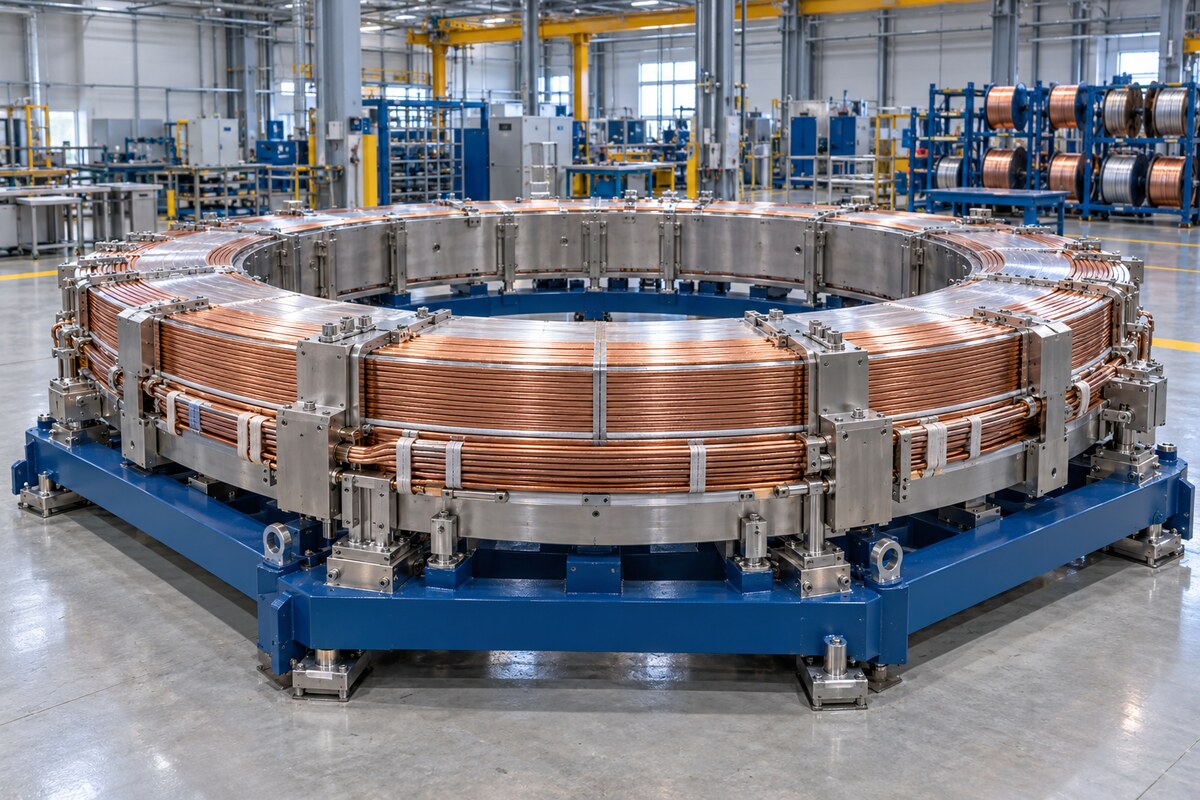
The Russian-procured PF1 magnet is the smallest of ITER’s six ring-shaped poloidal field coils. Factory acceptance testing was completed at the Sredne-Nevsky Shipyard in Saint Petersburg before ITER announced the result on Apr 4, 2022. The coil measured nine metres in diameter and weighed 160 tonnes. Its intended position is at the top of the machine, above the vacuum vessel. Approximately six kilometres of niobium-titanium conductor were required for its coiled superconducting layers, connecting a large manufacturing operation with a precisely defined place in the magnetic system.
Acceptance involved several forms of verification. The package included high-voltage direct-current tests at 30 kV, alternating-current tests at 10 kV, a 15 kV Paschen test in a vacuum chamber and leak testing. ITER specialists confirmed that the results met the project’s requirements. At that stage, shipment remained a subsequent activity: passing the factory tests authorised preparations for transport rather than demonstrating installation in the tokamak. PF1 was one of the systems within Russia’s procurement responsibility.

A wide load from Saint Petersburg
PF1 left the shipyard on Nov 1, 2022, after close to six years of fabrication. Its maritime route followed the Neva River and Gulf of Finland, then the Baltic Sea, North Sea, Atlantic and Mediterranean. The coil reached Marseille’s industrial harbour on Jan 9, 2023. Its land journey began one month later, and the convoy passed the ITER entrance at about 4:15 a.m. on Feb 10. The arrival completed the delivery of a major component from each of ITER’s seven Members.
The transport frame was more than ten metres wide, making the coil particularly difficult to steer through narrow roads and passages. Covering the 105-kilometre ITER itinerary took four nights rather than the usual three. A 288-wheel self-propelled trailer travelled with pulling and pushing tractors. Nine drivers, navigators and mechanics operated the transport machinery, while a separate fourteen-person team removed and replaced roadside obstacles. Seventy French Gendarmerie officers supported the operation. On arrival, PF1 entered protective storage; delivery and final installation were distinct milestones.
Busbars and the magnet-power supply chain
Russia’s electrotechnical contribution extends beyond the magnets themselves. A seventy-tonne shipment left Saint Petersburg on Dec 5, 2016, with a first stop in Kiel, Germany. It contained direct-current aluminium busbars for the poloidal field coils, correction coils and central solenoid, together with thermal-expansion absorbers and other busbar components. These conductors connect superconducting magnets with their electrical supplies and were specified to carry 70 kA. The shipment was the second delivery of Russian switching-network equipment. Under the procurement arrangement signed in 2011, the Efremov Institute was to manufacture and deliver approximately 5.4 kilometres of busbars, weighing more than 500 tonnes in total. Those programme figures covered the planned supply package, rather than the contents of that single consignment. The same procurement scope included switching equipment and energy-absorbing resistors for power supply and magnet protection. Fast-discharge units serve the protective function required when a superconducting coil experiences a quench, or sudden loss of superconductivity. ITER ranked the power-supply and protection package as the most expensive of Russia’s twenty-five assigned systems in its December 2016 assessment.

Prototype switching equipment
The Efremov Institute’s work also included prototype switching-network units. Tests conducted from Apr 2–6, 2018 examined current commutation at rated current. Francesco Milani, ITER’s technical responsible officer for the procurement package, witnessed the campaign and confirmed its satisfactory completion. The tested prototype met ITER’s technical requirements.
Switching networks have a particular role at the start of a plasma pulse. In the circuits of the central solenoid and poloidal field coils PF1 and PF6, current is diverted into large resistor banks to create the voltage used for gas breakdown and initial plasma-current ramp-up. The prototype system combined mechanical switches designed for continuous current up to 45 kA, thyristor circuit breakers and a two-stage counterpulse circuit. The Efremov test rig reproduced the electrical supply, transport and magnet functions needed to examine that equipment before installation.
Gyrotrons: a long development programme
Russian gyrotrons belong to another procurement chain: electron cyclotron resonance heating. In February 2018, ITER’s Electron Cyclotron Section leader Mark Henderson described devices operating at one megawatt for periods of 1,000 seconds. The project’s power and frequency requirements—1 MW at 170 GHz—had been defined in the late 1990s. Reaching those parameters involved work on the microwave-generating devices, launchers, transmission waveguides and artificial diamond windows. Gyrotrons also have applications in industrial heating, spectroscopy and diagnostics.

A gyrotron generates a beam of electrons whose motion is influenced by a strong magnetic field, producing high-frequency electromagnetic waves that can be guided toward the plasma. A Russian-manufactured production module at the Swiss Plasma Center was used to test upper-launcher and transmission-line components at high power and long pulse duration. In parallel, the first Russian units were undergoing factory acceptance testing at GYCOM in Nizhny Novgorod.
A building adapted to revised heating plans
By Nov 4, 2024, the Radiofrequency Building was ready to receive its first Russian gyrotrons. The revised baseline had changed the building’s role. Originally designed for both electron cyclotron and ion cyclotron heating, it would now be devoted exclusively to the electron cyclotron system. A separate structure southwest of the Assembly Hall was planned for ion cyclotron equipment. The three-storey building adjoins the Assembly Hall and houses power supplies, gyrotrons and the beginning of the transmission lines. Equipment supplied by the European contractor Ampegon occupied much of the first level; installation of the power-supply equipment was complete, with final adjustments under way. GYCOM personnel were due to begin installing the first two Russian units that week under an agreement with the Russian Domestic Agency. The building’s readiness, its electrical installations and the arrival of wave-generating equipment were separate parts of the preparation programme.
Three Russian units installed in 2026
ITER confirmed on Jun 8, 2026 that the first three Russian-made gyrotrons had been installed on the Radiofrequency Building’s top floor. The work took place during a six-week mission by a three-person team representing the Russian Domestic Agency, the Institute of Applied Physics of the Russian Academy of Sciences and GYCOM. ITER Project Associate Andrei Fokin led the installation team. The units were in their operational locations, while auxiliary work and connections still remained.

Caroline Darbos, ITER’s technical responsible officer for gyrotrons, identified cabling and associated systems as the next activities before testing could begin. The units were ready for connection to matching optics units: two-mirror systems that couple their outputs to the transmission lines leading toward the tokamak. A further Russian team was expected in September to complete connections and begin commissioning.
Upper ports and cross-border fabrication
Procurement responsibility does not always identify the country of manufacture. ITER Russia’s eighteen upper vacuum-vessel ports were manufactured in Germany, with some subsequently mounted on vessel sectors by contractors in Italy and Korea. NIIEFA, the Efremov Institute, coordinated the procurement under an arrangement signed in 2009; manufacturing began in 2014. The ports form stainless-steel access corridors for maintenance, diagnostics, heating, fuelling and vacuum pumping. They are also part of the vessel’s confinement and safety boundary. The documented manufacturing and acceptance chain included:
- qualified welding procedures and personnel;
- factory acceptance tests with ITER and Russian observers;
- site acceptance tests at the receiving manufacturers.
The Russian agency and its suppliers prepared more than 250 procedures and documents for upper port stub extension #12. Material procurement, drawings, quality documentation and qualification of non-destructive testing personnel accompanied physical fabrication. Port stub extensions were shipped to sector manufacturers for welding onto vessel sectors; later extensions were to be delivered directly to ITER for installation after the magnets.

Testing the equipment carried by port plugs
A separate Russian contribution provides facilities for qualifying completed port plugs. On Nov 17, 2025, ITER marked the arrival of the first vacuum test tank from Russia. Victor Udintsev, head of the Diagnostics Program, associated the initial test bench with sixteen diagnostic port plugs needed for the first operational phase. The tank was central to a complete bench incorporating heating, vacuum, handling and control systems. Russian manufacturer GKMP supplied the test-stand technology, with Olesya Solovyeva directing its ITER project.
The planned programme included thermal cycling under high vacuum to assess outgassing, plus checks on cooling circuits under high pressure and pressure drops. Stainless-steel port plugs can weigh up to 48 tonnes and both carry equipment and seal vessel openings. The facility was expected to start with one bench and later expand to three; a separate fourth stand was planned for Fusion for Energy. Testing upper port plug #4 was scheduled for 2026. The tank’s arrival was a completed delivery, while those operating and expansion milestones remained forecasts.
Russian components within larger assemblies
Russia also supplies the dome of the ITER divertor. The integration programme brings that contribution together with cassette bodies, inner and outer vertical targets, diagnostics and instrumentation. Following a global tender, ITER contracted a consortium led by the Southwestern Institute of Physics in December 2024. Dedicated facilities at Qinshan were inaugurated in May 2026. By June, prototypes were unpacked and preparations were complete for practice integration, with series-production components beginning to arrive alongside them.

ITER engineer Laurent Ferrand described fifty-eight cassette assemblies: fifty-four for the machine and four spares. Their cooling connections and instrument layouts vary, and each cassette has a specific position rather than being interchangeable. The 1,400-square-metre clean room was to accommodate two production lines. Bespoke lifting, attachment and welding tools needed qualification alongside personnel and procedures. Prototype assembly was planned for later in 2026, followed by series integration in 2027.
Cold testing before integrated commissioning
The Magnet Cold Test Facility adds another qualification stage relevant to PF1. On May 21, 2026, ITER announced that the first coil had cooled to 4 K, approximately minus 269°C, over twelve days. That first test object was a 330-tonne toroidal field coil made with niobium-tin conductor. Further toroidal coils and the Russian-procured PF1 were selected for the programme. The facility occupies the building previously used to manufacture four large European poloidal field coils.
Cold testing was intended to examine cryogenic behaviour, electrical interfaces, instrumentation and joints between wound-superconductor layers. It also provided experience with connected vacuum, power, cooling and control systems ahead of integrated commissioning. The test programme included insulation checks, quench detection and verification at nominal current. Each coil campaign was expected to take four to six months. ITER cautioned that external testing could not reproduce every operating condition within the machine. PF1’s selection for the programme therefore identifies a planned testing responsibility, without establishing that its cold tests had already finished.
Scientific cooperation alongside procurement
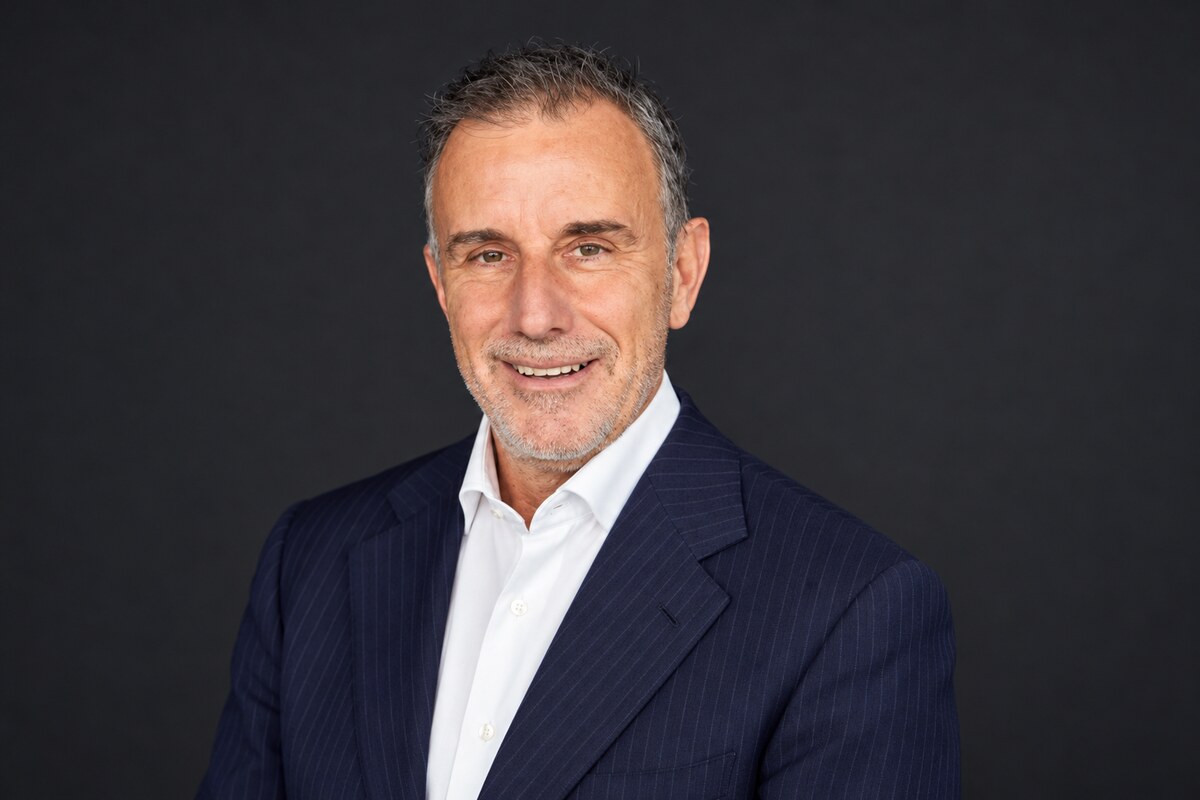
Institutional links continued in 2026. On Jun 4, Kurchatov Institute President Mikhail Kovalchuk and ITER Director-General Pietro Barabaschi signed a cooperation agreement in Saint Petersburg. It covered scientific information exchange, joint research programmes, training for young scientists and engineers, and joint supervision of doctoral research. Barabaschi also participated in the St. Petersburg International Economic Forum. He joined a megascience discussion on international cooperation moderated by Kovalchuk, and concluded the visit with a lecture on the ITER project at the institute. The Kurchatov Institute’s ITER work included toroidal field conductors, upper vacuum-vessel ports, the divertor dome, gyrotron systems and diagnostics.
Valery Falkov, Russia’s Minister of Science and Higher Education, led a twenty-person delegation to ITER on Jul 16, 2026. The group met Barabaschi, senior officials and Russian staff, then visited tokamak assembly, magnet cold testing, gyrotron integration and the port plug test facility. Participants included Anatoly Krasilnikov, head of ITER Russia; Victor Ilgisonis, Rosatom’s director for research and development; and Grigory Trubnikov, director of the Joint Institute for Nuclear Research. A Kurchatov Institute delegation led by Director Iuliia Diakova had visited the previous day. Discussions concerned possible work on plasma disruptions, runaway electrons and joint training for tokamak operation. These subjects lay within the scientific and technical agreement signed in June. Barabaschi supported continued cooperation around the shared scientific objective, while Falkov presented ITER as a setting for international scientific trust.

The continuing European debate
The political dispute remains. Commissioner Dan Jørgensen’s stated position was that ITER’s founding rules permit voluntary withdrawal rather than expulsion. MEP Andrea Wechsler called for a comprehensive security and strategic review of Russian participation and safeguards against new technological dependencies. Clean Air Task Force fusion director Sehila Gonzalez de Vicente expected cooperation to become more concentrated among trusted partners as countries and companies protect sensitive technologies. These competing positions were part of the European discussion in September 2026.









Leave a comment