
The Lagoon and Trifid nebulae appeared among the first images unveiled by the Vera C. Rubin Observatory on June 23, 2025. Their clouds of gas and dust lie roughly 4,000 light-years away. The observatory on Cerro Pachón in Chile was preparing a ten-year survey of a changing sky, with completion and survey data collection then expected later in 2025.
Yusra AlSayyad of Princeton University, who oversees Rubin’s image processing, emphasized its combination of a wide field and repeated observations at a June 9 briefing. Camera lead Aaron Roodman expected those repeated views to reveal millions of changing objects each night. The observatory carries the name of Vera Rubin, whose work in the 1970s supplied convincing evidence for dark matter. That invisible material accounts for around 85 percent of the universe’s matter; Rubin died in 2016.

A camera built for measurement
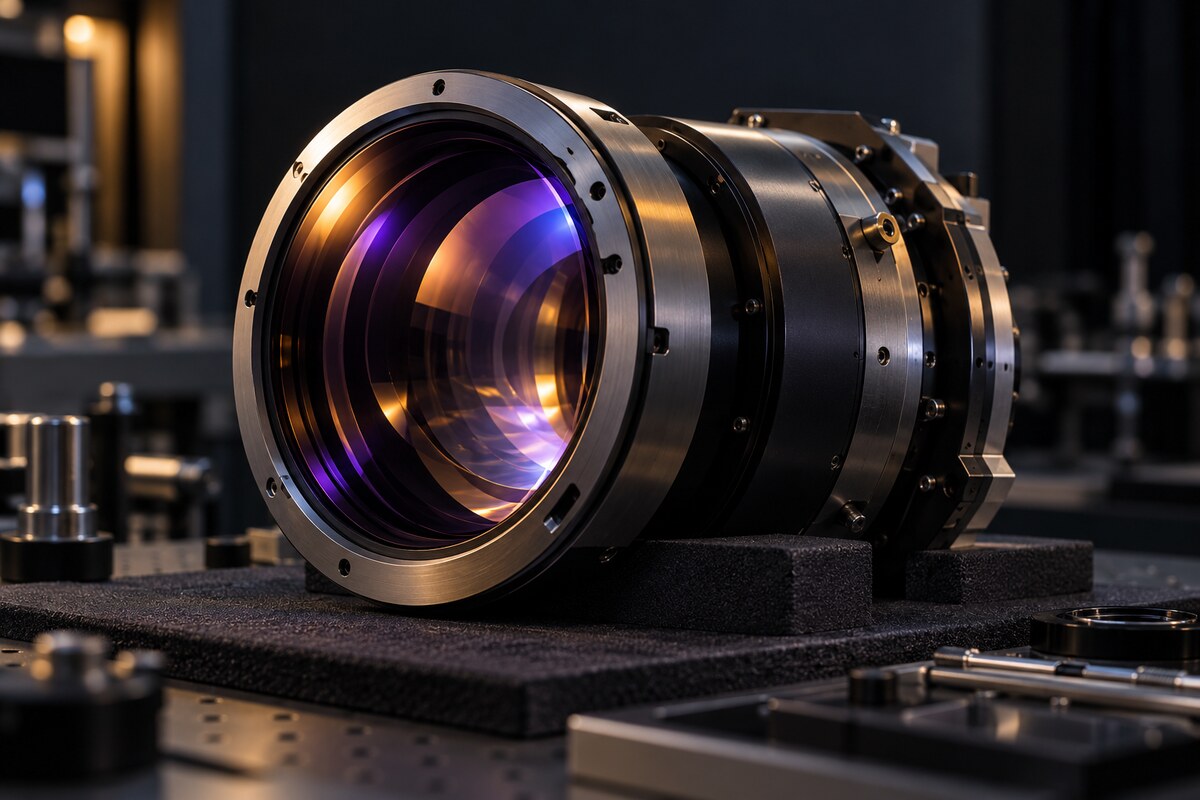
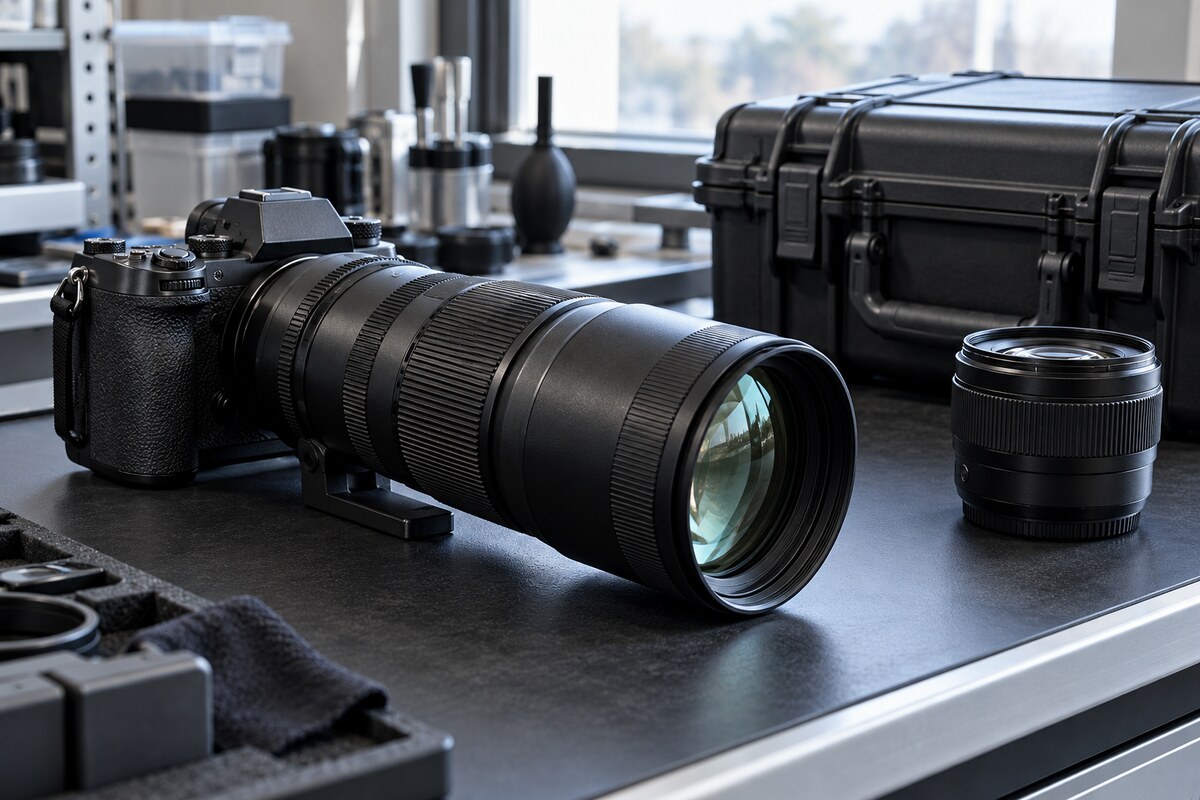
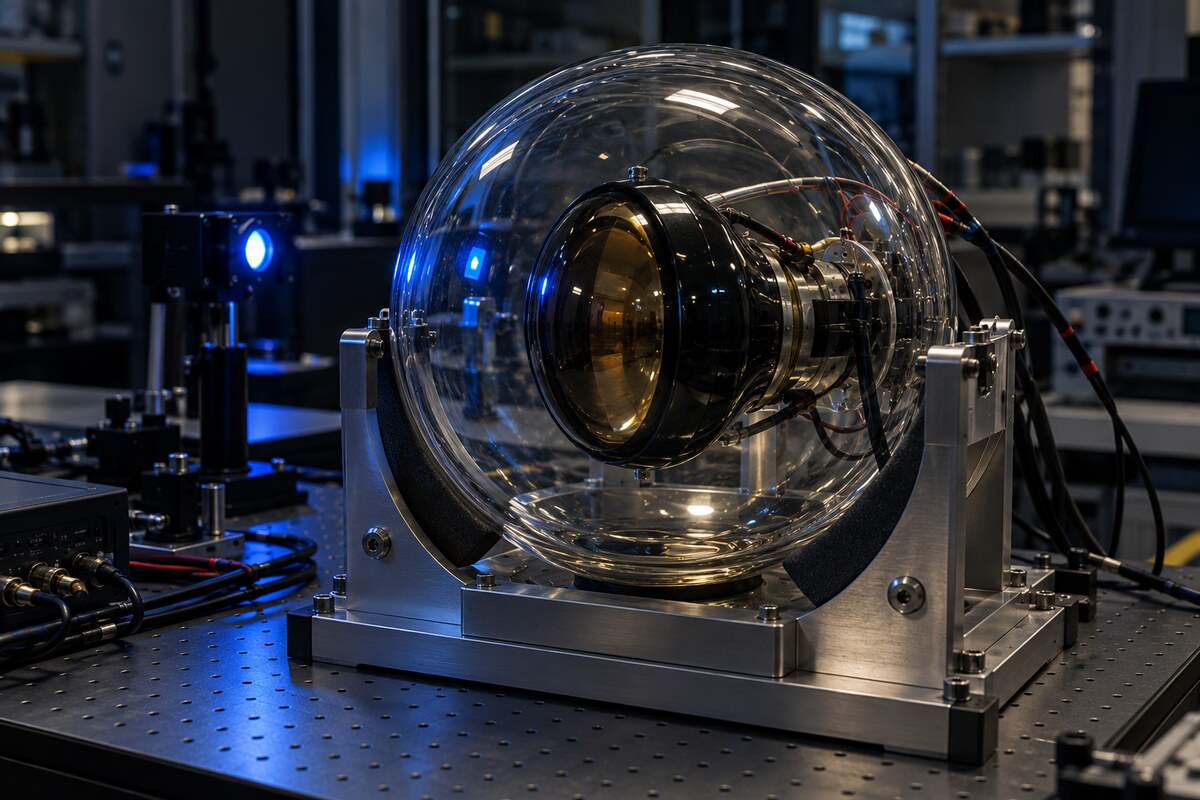
The LSST Camera reached construction completion at SLAC National Accelerator Laboratory in April 2024 after two decades of work. Its 3,200-megapixel focal plane contains 201 custom CCD sensors with pixels ten microns wide. The front lens measures 1.57 meters across. Another large lens maintains optical clarity while sealing the vacuum chamber around the focal plane. Brookhaven National Laboratory built the sensor array, Lawrence Livermore National Laboratory and industrial partners developed the lenses, and France’s IN2P3/CNRS contributed sensor electronics and the filter exchange system. That mechanism selects six light bands from ultraviolet to infrared. The focal plane’s flatness varies by less than one-tenth of a human hair’s width.
The camera measures positions and brightnesses for a large catalog of celestial objects. Researchers intend to use galaxy shapes to investigate weak gravitational lensing: intervening mass subtly bends the light arriving from more distant galaxies. Those measurements can constrain the distribution of mass and its evolution. Galaxy clustering and supernova observations provide further ways to investigate dark matter and dark energy. The same camera also supports studies of faint Milky Way stars, small Solar System bodies and changes around supermassive black holes.
From California to the summit
The camera traveled inside a modified six-meter shipping container, attached to a custom frame clamped to the floor structure. Insulation limited heating; protective wrapping and data loggers accompanied the instrument. Sensors monitored temperature, humidity, vibration and acceleration, while GPS tracked the container. A 2021 shipment of a steel camera mass simulator had already supplied experience of the route and the stresses encountered. Mechanical engineer Margaux Lopez led the shipping preparations for the $168 million instrument. Pilot and tail vehicles accompanied the final mountain climb; the remaining equipment trucks followed over two days to limit traffic disruption.
On May 14, 2024, the camera left for San Francisco airport aboard an air-ride vehicle. Six other truckloads of associated equipment joined the shipment for a chartered 747 cargo flight. Two camera team members accompanied the ten-hour journey to Santiago, where the aircraft landed early on May 15. A nine-truck convoy continued toward Cerro Pachón. The camera’s final 35-kilometer mountain ascent took about five hours. At the observatory, staff moved it into a controlled white room, inspected its condition and checked the recorded stresses before further testing.
Moving the primary mirror
The combined primary and tertiary mirror had reached Cerro Pachón in May 2019, but remained protected in a storage building outside the observatory. On March 7, 2024, the summit team moved the uncoated glass blank approximately 600 meters to the maintenance floor. A specialized truck carried its transport box. The preceding day, a steel surrogate mirror had traveled out of the observatory, clearing space and providing a test journey in approximately the reverse direction.
Javier Cortés, the company that had transported the mirror from the Coquimbo dock in 2019, participated in both summit moves. Months of planning and weeks of preparation preceded the two transport days. The summit safety team checked training and working arrangements. Inside the crowded maintenance area, staff temporarily placed the mirror’s steel support structure in the equipment elevator to accommodate the box. The next planned operations were unpacking the glass with a custom vacuum lifting fixture and preparing it for the observatory’s own coating chamber.

A protected silver surface
On April 27, 2024, the 8.4-meter primary/tertiary mirror received its first protected-silver coating. Its two differently curved optical surfaces share one glass structure, fabricated over seven years at the University of Arizona’s Richard F. Caris Mirror Lab. A 128-ton chamber supplied by VON ARDENNE used magnetron sputtering to deposit the coating. For this large mirror, the vacuum-sealed mirror cell formed the chamber’s base after its lower half was removed. The equipment can accommodate either mirror size and deposit aluminum, silver or combinations of materials in a coating run.
The coating team, led by Tomislav Vucina, tested the selected layer recipe on a steel surrogate before applying it to glass. A nickel-chromium adhesion layer came first, followed by 64 grams of reflective silver, another adhesion layer and a protective silicon-nitride layer. The outer layer had to withstand cleaning while limiting light absorption. Deposition took approximately four and a half hours. On the following day, the team checked reflectivity, adhesion, pinholes and appearance. These tests established that the completed coating met its requirements before the mirror advanced toward telescope installation.
Supporting the secondary mirror
The 3.5-meter secondary mirror was installed on the Simonyi Survey Telescope by August 2024. Corning Advanced Optics manufactured the ten-centimeter-thick blank from ultra-low-expansion glass in Canton, New York. After storage at Harvard University, L3Harris Technologies polished and finished the convex surface in Rochester. The blank had been delivered in 2009 and spent five years at Harvard before polishing; L3Harris developed measurement techniques for its large convex surface. The glass and cell components reached Chile in 2018; the mirror received protected silver in 2019 and was integrated with its cell in early July 2024.

L3Harris also designed and built the cell assembly. Its stiff mounting plate carries 72 axial and six tangent actuators that support and control the thin mirror under gravity. Electronics, sensors, thermal controls and mirror-control software complete the assembly. During installation, a specialized cart rotated the mirror upright. The summit team lifted it onto the mount while maintaining active control to avoid stressing the glass, then bolted it in place. Staff connected the cell to the electronics cabinet and reactivated its software. This was the first permanent optical component installed on the telescope.
First light through the test camera
In October 2024, the Commissioning Camera completed Rubin’s first end-to-end on-sky engineering test. Starlight passed through the telescope optics to the detector, and the resulting digital image traveled from Chile to the U.S. Data Facility at SLAC in California. The test camera occupied the physical envelope intended for the science camera, but its detector contained just 144 megapixels rather than 3,200.
The observing sequence began before sunset with preparation of the telescope, dome and mirrors. Twilight calibrations preceded pointing at a bright star to establish pointing and focus. At 9:53 p.m. local time, the team requested a 30-second exposure under a fully dark sky. Confirmation that California had received the image completed the test. Precise mirror alignment, optical shaping and pipeline checks remained further commissioning tasks. At that stage, the science camera was still being prepared separately for installation.

Seven weeks of system checks
The ComCam campaign ran from October 24 to December 11, 2024, acquiring about 16,000 exposures. Its nine CCDs formed a 144-megapixel mosaic. The science camera’s much larger field would cover about 45 full-Moon areas in each exposure, compared with approximately two for ComCam. Hundreds of engineers, scientists and observing specialists participated in the commissioning effort.
What the campaign exercised
- The active optics system maintained mirror positions and shapes as the telescope changed direction.
- Tests checked how the observatory’s complex systems worked together.
- Observations demonstrated early image quality through all six filters.
- Data moved from Chile to SLAC, where processing pipelines operated on the incoming exposures.
The telescope’s assembled components had been positioned to better than about one millimeter. Good early images arrived before all detailed optical adjustments and environmental controls were active. After the campaign, the next major construction task was replacing ComCam with the LSST Camera, followed by further full-system testing and verification.
Installing the science camera
In early March 2025, the summit team lifted the LSST Camera onto the Simonyi Survey Telescope after months of testing in the maintenance-level clean room. The vertical platform lift moved it up to the telescope floor, where it was placed on a transport cart. A custom lifting device then positioned and secured the instrument on the telescope. Mechanical Group Lead Freddy Muñoz described an operation requiring planning across the observatory and millimeter precision.

The installation milestone placed the final optical component alongside the combined primary/tertiary mirror and secondary mirror. It did not finish the camera’s integration work: utilities and other systems still needed connections and tests over the following weeks. System Integration Scientist Kevin Reil emphasized the sequence of planning, positioning and final testing. Camera Project Manager Travis Lange credited the range of skills involved in its construction. The immediate objective remained preparation for the first publicly shared images and the subsequent survey.
Engineering exposures in April
On April 15, 2025, the LSST Camera began taking on-sky engineering data with the i-band filter in the beam. The first iterations produced a median image width of about 1.8 arcseconds across the focal plane, measured as full width at half maximum. This preceded detailed active-optics tuning. On the second night, image widths below one arcsecond were achieved over most of the focal plane. The U.S. Data Facility transferred and processed the three-gigapixel images within about a minute of acquisition.
Keith Bechtol’s April 17 commissioning update recorded 183 of the 189 science CCDs operating on the first night. Six were switched off as a precaution because of technical issues, with work continuing to return them to service. This was a dated engineering condition. Refrigeration, acquisition and control systems were operating smoothly a few weeks after installation. The LSST Camera’s wavefront sensors now supported further active-optics tuning. The team’s immediate priority was commissioning automatic, reliable operation, with months of additional work still anticipated.

The scale of the June images
The June 23 First Look release included a Lagoon-and-Trifid composite assembled from 678 images taken over slightly more than seven observing hours. Another sequence combined over 1,100 images into a view containing about ten million galaxies. Across roughly ten hours of observations, Rubin discovered 2,104 previously unseen asteroids. Seven were near-Earth asteroids, which the observatory identified as posing no danger. These were early observational results ahead of the planned decade-long survey.
The First Look release also set out the expected data scale: approximately 20 terabytes per night, a further 15-petabyte catalog database and around 500 petabytes generated by processing over ten years. Those figures were projections for the survey, rather than data already accumulated at the debut. Regular releases were intended to let scientists investigate remotely. Sandrine Thomas, deputy construction director and associate director for summit operations, said several important months of commissioning and testing remained before full science operations.
A separate preview for researchers
Data Preview 1 was released on June 30, 2025, a week after the image unveiling. It contained image and catalog products derived from ComCam observations, processed with Rubin Science Pipelines version 29. The observations sampled seven fields, each approximately one square degree, during seven weeks in late 2024. This preview therefore came from the commissioning camera rather than the full science camera’s June publicity imagery.

Access through the Rubin Science Platform was restricted to Rubin data-rights holders. Those rights covered scientists and students in the United States and Chile, plus named members of international in-kind teams. The preview’s documentation organized images, catalogs and maps alongside processing descriptions and tutorials for the platform’s Portal, Notebook and API interfaces. Its processing topics included calibration, coaddition, source measurements, difference-image analysis and moving-object processing. The preview supplied a concrete dataset for learning those workflows while the wider observing program continued toward later releases.
Later data and the alert stream
By February 24, 2026, Rubin alerts were streaming in real time to brokers and were accessible to the global scientific community. The observatory’s data-release information, updated October 23, 2026, distinguished public alerts and Solar System observations from proprietary preview datasets. Alert contents and the sky coverage of their comparison templates continued to evolve during this early-science period. Solar System observations were available through the Minor Planet Center under Rubin’s observatory code X05. The Asteroid Institute, part of the B612 Foundation, maintained a Rubin-only subset of those observations.
Early Data Preview 2 used the LSST Camera, processing observations from April 2025 through January 2026 with pipeline version 30. Its early image products were deep coadds, while catalogs included measurements on processed visit images and difference images. Both this preview and DP1 remained proprietary until two years after release. Data Preview 0, by contrast, provided publicly shareable simulated LSST-like products. These later releases retained different instruments, observation periods, processing versions and access conditions.


















Leave a comment