
NASA’s SPHEREx observatory launched from Vandenberg Space Force Base in California, United States, aboard a SpaceX Falcon 9 on March 11, 2025. Its planned two-year survey encompassed more than 450 million galaxies and over 100 million Milky Way stars. The mission combines 102 infrared wavelengths with measurements of galactic distances. Instrument scientist Phil Korngut and NASA astrophysics official Shawn Domagal-Goldman described its search for signatures of cosmic inflation, a proposed extraordinarily rapid expansion shortly after the big bang. The big bang occurred about 13.8 billion years ago.
SPHEREx also targets water, carbon dioxide and carbon monoxide frozen onto interstellar dust. Four PUNCH satellites shared its launch. Their separate investigation concerns the transition between the Sun’s corona and solar wind. PUNCH scientist Nicholeen Viall described combining their observations into a global three-dimensional view; solar activity can disrupt satellites and electricity networks.
Testing cold optics before flight
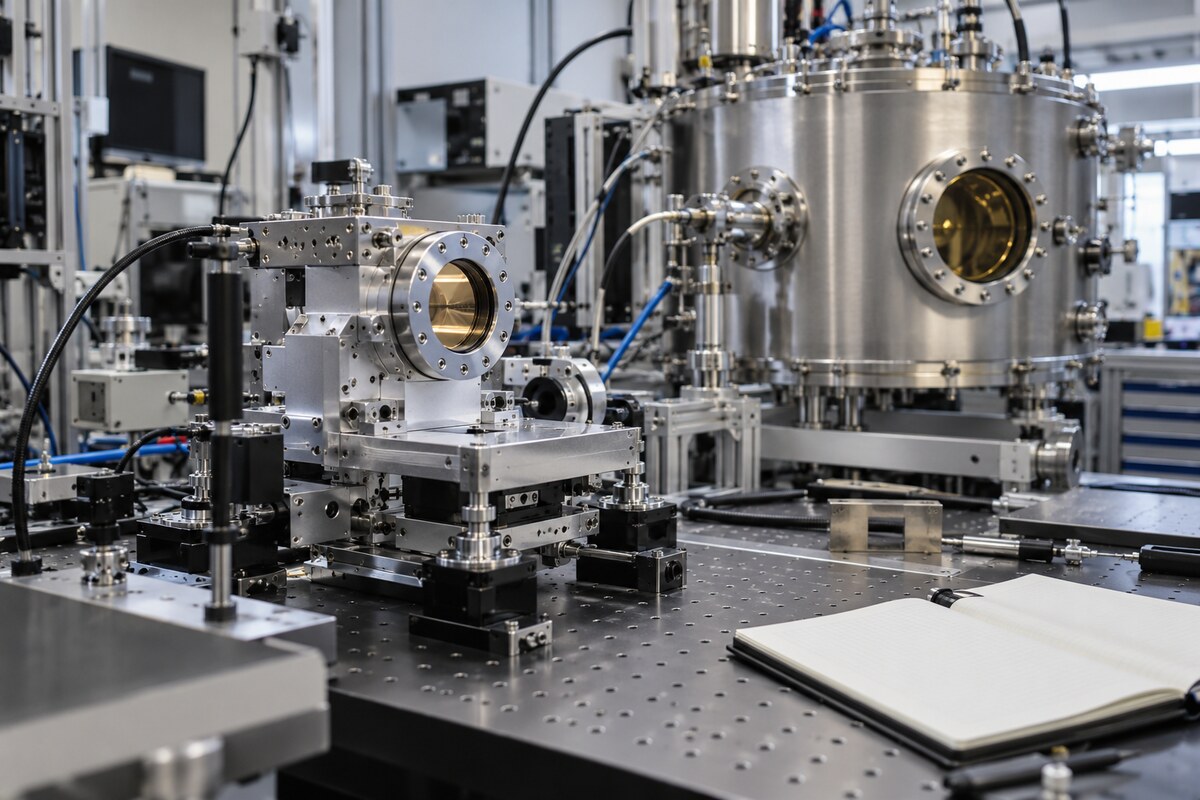
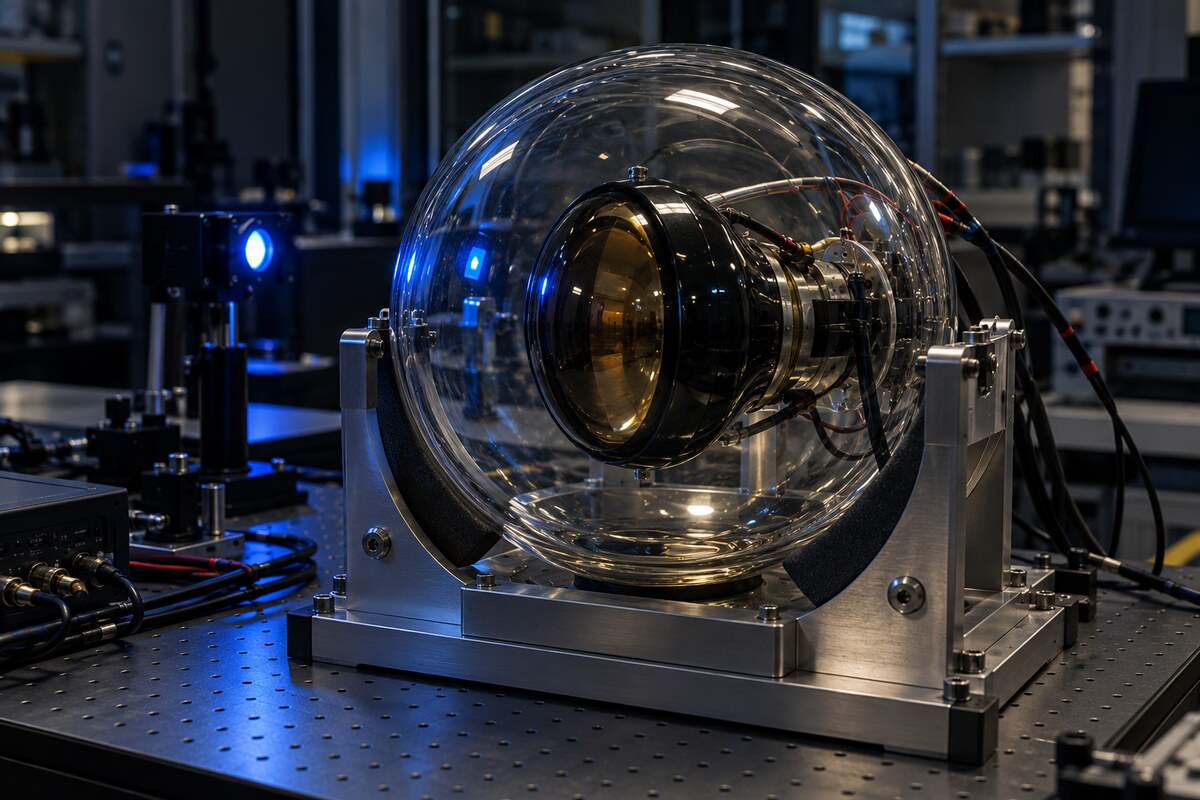
SPHEREx’s instrument underwent cold-vacuum testing in the basement of Caltech’s Cahill Center for Astronomy and Astrophysics during 2023. The Korea Astronomy and Space Science Institute built the specialised chamber, large enough to accommodate the telescope and reproduce its cold operating environment. A collimator projected an artificial star through a gold-coated sapphire window. The window admitted the test signal while reflecting unwanted thermal radiation from the surrounding laboratory. Instrument scientist Phil Korngut identified that laboratory glow as a background capable of overwhelming the detectors.

The qualification programme combined those optical measurements with mechanical testing at the Jet Propulsion Laboratory. A shaker reproduced launch vibrations, allowing the team to check whether the telescope retained its focus. Caltech’s September 2023 account also described the staged V-groove radiators that send heat towards space. The telescope’s tilted orientation addressed a separate constraint: mapping the ecliptic poles while keeping sunlight outside the thermal system. These were defined optical and thermal requirements, tested before spacecraft integration rather than adjustments deferred until orbit.
Pixels, electronics and partner laboratories
Caltech’s instrument team brought together scientists, engineers and students to build and test the telescope, two focal-plane cameras and their readout electronics. Chi Nguyen characterised the detectors, while calibration scientist Howard Hui measured the wavelength response of the instrument’s 24 million pixels. Different pixels respond differently, requiring measurements across the detector rather than a single calibration number for the whole camera. Hui also described distinguishing instrumental effects and other unwanted signals from the astronomical measurements needed for cosmology.
BAE Systems built the telescope and spacecraft, Caltech led the instrument electronics, and IPAC developed the processing pipeline. JPL supplied spaceflight experience alongside the university team’s instrument-building work. Electronics specialists associated with NuSTAR also contributed. After characterisation and testing, the instrument travelled to Colorado for spacecraft integration. Nguyen distinguished an initial detector-health image from the later focused first-light observations: the early image was deliberately taken before stable pointing had been commanded. Its blur therefore did not indicate a failed focus test. That distinction preserves the separate purposes of an aliveness check and an astronomical exposure.
Rehearsing operations
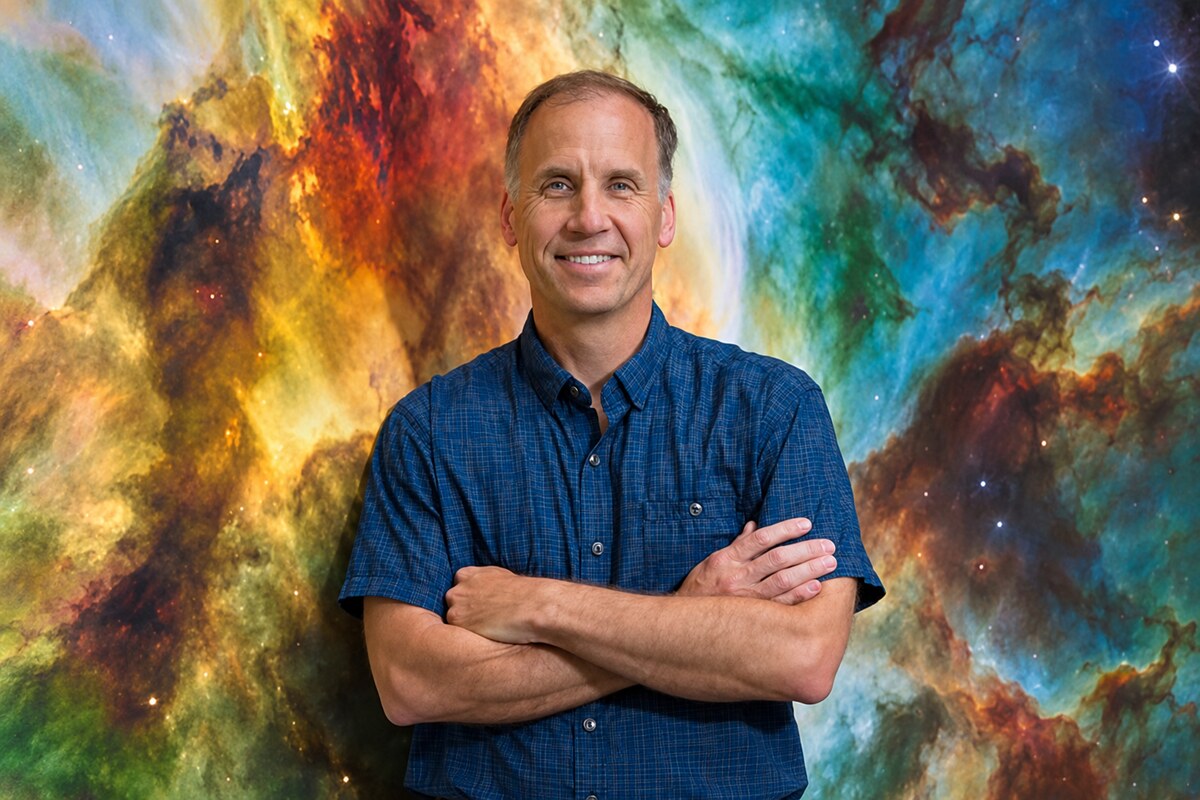
In October 2024, the team conducted its first Operational Readiness Test at JPL’s Earth Orbiting Missions Operation Center. The exercise simulated normal launch and post-launch events to assess procedures and training before the spacecraft flew. In the control centre, instrument-team members included Phil Korngut, Chi Nguyen and Howard Hui.
Opening the telescope in orbit
On March 18, 2025, controllers commanded SPHEREx to discard its protective aperture cover. The lid measured about 64 by 40 centimetres and had kept particles and moisture away from the telescope’s three mirrors. Two mechanical release mechanisms freed it, with springs pushing the cover clear. The discarded hardware then drifted away; NASA expected it eventually to burn up in Earth’s atmosphere. The operation exposed the optical opening after launch protection had served its purpose.
Controllers could not simply take a photograph to verify the release. The camera was not yet powered on, because the instrument first needed to cool. Instead, engineers observed small changes in spacecraft orientation after each mechanism released. A subsequent temperature drop supplied another indication that the telescope had opened to space. Around the telescope, three conical photon shields continued to protect it from light and heat from Earth and the Sun. Those shields remained part of the observatory; they were separate from the one-time protective cover that had been ejected.

First light was an engineering checkpoint
SPHEREx captured first-light observations on March 27, which NASA released on April 1, 2025. Each exposure supplied six detector images. The upper and lower sets viewed the same patch of sky in different wavelength ranges, and each detector provided 17 wavelength bands. NASA expected individual images to contain more than 100,000 light sources. Visible colours in the released illustrations represented infrared measurements; they were a display convention for radiation that human eyes cannot directly see.
The initial images were uncalibrated and were not yet ready for scientific analysis. They nevertheless allowed the team to assess the instrument’s optical performance. The focus had been set before launch and could not be adjusted in space. Project scientist Olivier Doré described the observatory as performing as designed, while principal investigator Jamie Bock credited the instrument team’s preflight work. The telescope’s cooling continued towards approximately minus 210 degrees Celsius. Low instrument temperatures matter because the telescope’s own infrared emission can interfere with the faint radiation arriving from astronomical targets.
A survey built from repeated exposures
Regular science operations began on May 1, 2025, following about six weeks of checkout and calibration. The planned observing rate was approximately 600 exposures a day. With six detector images per exposure, that corresponds to roughly 3,600 individual images, rather than 3,600 independent spacecraft pointings. NASA outlined a 25-month survey phase encompassing more than 11,000 orbits. SPHEREx circles Earth about 14½ times daily, travelling north to south across the polar regions.

Each day’s observations form a circular strip on the sky. Earth’s movement around the Sun gradually shifts that strip, enabling coverage in every direction over six months. Between exposures, the whole observatory changes orientation. Internal reaction wheels control those changes instead of thruster firings; the mirrors and detectors do not perform the scanning motion themselves. NASA also planned more than nine million observations of interstellar clouds. Different wavelengths distinguish features such as ionised sulfur and carbon-rich dust in the NGC 1760 star-forming region, alongside the light of its stars.
The route from detector to public archive
By July 2, 2025, SPHEREx had begun delivering survey data to the NASA/IPAC Infrared Science Archive, or IRSA, each week. NASA specified release within 60 days of an observation. Processing during that interval removes or flags artefacts, accounts for detector behaviour and aligns images with astronomical coordinates. The team also publishes its processing procedures. Rachel Akeson, who led the SPHEREx Science Data Center at IPAC, described public access as a way to enable investigations beyond the mission team’s own programme.
The archive places the survey alongside observations from other missions. SPHEREx’s 102 infrared wavelengths extend a different measurement approach from WISE’s four bands. Its data can identify targets for detailed James Webb observations, refine parameters derived from TESS and support joint studies with Euclid and the planned Nancy Grace Roman telescope. IRSA science lead Vandana Desai emphasised the possibilities of combining survey resources. These relationships concern complementary measurements and future research uses; they do not make every archived image a completed finding about dark matter, planets or galaxy formation.

The first all-sky mosaic
In December 2025, SPHEREx completed its first infrared mosaic of the entire sky. NASA announced the milestone on December 18. Each of the 102 wavelength channels supplies its own view, so an all-sky survey contains many related maps rather than a single ordinary colour photograph. Selected display combinations highlight stars and galaxies, hot hydrogen gas or interstellar dust. A cloud that glows strongly at one infrared wavelength can look very different at another.
Three additional all-sky scans remained in the primary mission plan. Combining repeated surveys was intended to increase measurement sensitivity. The first mosaic therefore marked broad sky coverage, while the mission’s distance measurements and cosmological analyses remained separate tasks. Scientists planned to use the three-dimensional distribution of galaxies to examine subtle variations in clustering associated with theories of the early universe. The telescope’s wide view complements observatories with narrower fields and more detailed spectroscopy. Its December milestone concerned an observing product already assembled, alongside scientific questions that the resulting measurements were intended to address.
What a released science file contains
SPHEREx’s public data passed through successive processing releases from July 2025 to September 2026. Quick Release 1 began in July 2025, followed by improved Quick Release 2 calibration in October. The archive retired the first version in February 2026, corrected point-spread-function header information in April and began Quick Release 3 in September. Those dates describe revisions to available products, not additional spacecraft launches or changes to the original observing date.

- IMAGE stores calibrated surface brightness; FLAGS identifies pixel conditions.
- VARIANCE describes measurement uncertainty, while ZODI supplies a model of zodiacal light.
- PSF characterises how point sources appear, and WCS-WAVE maps detector locations to wavelengths.
An approximately 70-megabyte spectral-image file contains those six extensions, with one file per detector when the observation passes the relevant quality assessment. The calibrated image has 2,040 by 2,040 pixels, with surface brightness expressed in megajanskys per steradian. The zodiacal-light model has not already been subtracted from IMAGE. Wavelength information intended for visualisation is separate from the CWAVE and CBAND calibration layers recommended for scientific analysis. Users therefore need both the measured image and the associated calibration information, rather than treating every supplied array as interchangeable.
Mapping ice across molecular clouds
An April 15, 2026 study used SPHEREx observations to investigate interstellar ice across regions more than 600 light-years wide. The work examined molecular clouds in Cygnus X and the North American Nebula. Lead author Joseph Hora of the Center for Astrophysics, Harvard & Smithsonian, described using diffuse background light through clouds, extending observations beyond ice detected along the sightline to individual bright stars. Ice absorbs particular infrared wavelengths, allowing its distribution to be compared with the surrounding dust.
Dense, dark filaments contained strong ice signatures. The finding supported the hypothesis that ice forms on tiny dust grains and that dense material protects it from ultraviolet radiation. Coauthor Gary Melnick highlighted environmental differences affecting water and carbon dioxide ice. Radiation from young massive stars and the heating of grains can alter their abundances in different ways. These were observations of material in star-forming environments and interpretations of its chemistry. They did not demonstrate that a particular future planet would acquire oceans or develop life, even though water-bearing reservoirs are relevant to those broader research questions.

A passing comet in the survey’s view
SPHEREx also observed interstellar comet 3I/ATLAS in August and December 2025. By December, the comet displayed a brighter, more chemically varied coma; NASA published these observations on February 4, 2026. Researchers identified water, carbon-bearing gases and organic molecules including methanol, cyanide and methane. Organic chemistry is compatible with non-biological processes; identifying these molecules does not establish biological activity. The coma is the gaseous envelope around the nucleus, distinct from the solid body itself.
Study lead Carey Lisse associated the later activity with heat reaching subsurface ice after the comet’s closest approach to the Sun. Under that interpretation, delayed sublimation released material that had previously remained below the surface. The observations also suggested relatively large ejected grains, which solar radiation pressure would move less readily than fine dust. Yoonsoo Bach of the Korea Astronomy and Space Science Institute described the opportunity supplied by the telescope’s location and broad sky view. The comet observations supplemented SPHEREx’s planned galaxy and interstellar-ice programme without changing the mission into a dedicated comet spacecraft.
Brown dwarfs extend the spectral sample
On October 8, 2026, NASA described another application: spectra of 37 nearby brown dwarfs spanning temperatures from approximately 2,200 to minus 20 degrees Celsius. Brown dwarfs form through collapsing gas but lack enough mass to sustain hydrogen fusion. Their warm atmospheres emit infrared light even without a host star. The observations revealed water, carbon dioxide, carbon monoxide and methane, with different spectral signatures across the temperature range.

Lead author Zafar Rustamkulov and coauthor J. Davy Kirkpatrick, both associated with Caltech’s IPAC, discussed differences between the observations and atmospheric models. Models captured broad chemical trends but had difficulty reproducing some transitions involving changing clouds and methane-rich atmospheres. Objects at similar temperatures could still have distinct spectra. The published sample comprised 37 objects; thousands more were being analysed, rather than already included in that result. For SPHEREx, those spectra provided another dated application of the same wide-field measurements used for its survey, extending the archive’s scientific uses beyond the main cosmological objectives.


















Leave a comment